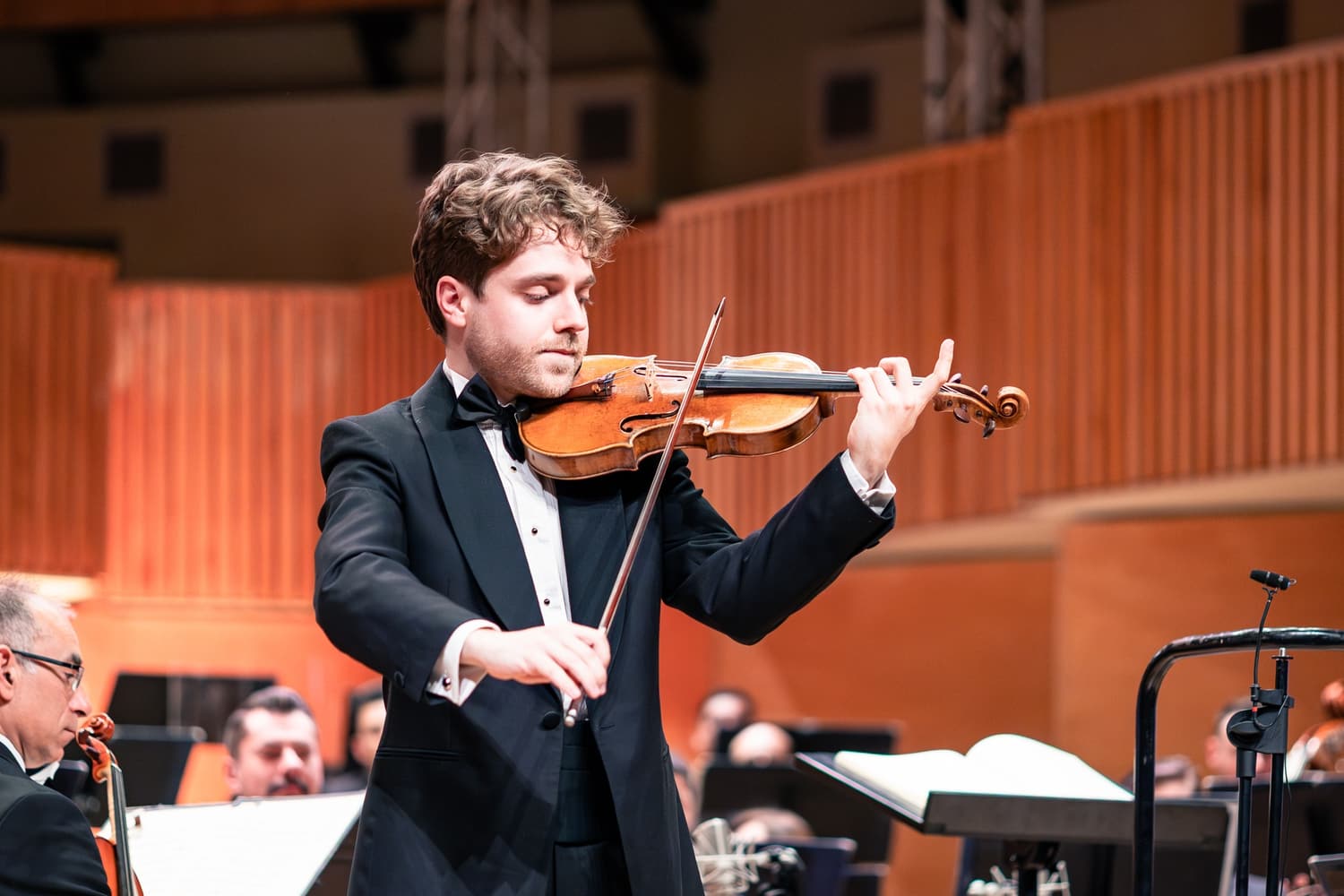
“He already stands out as one of the most versatile soloists of his generation. ”— Le Figaro
Portrait in five movements
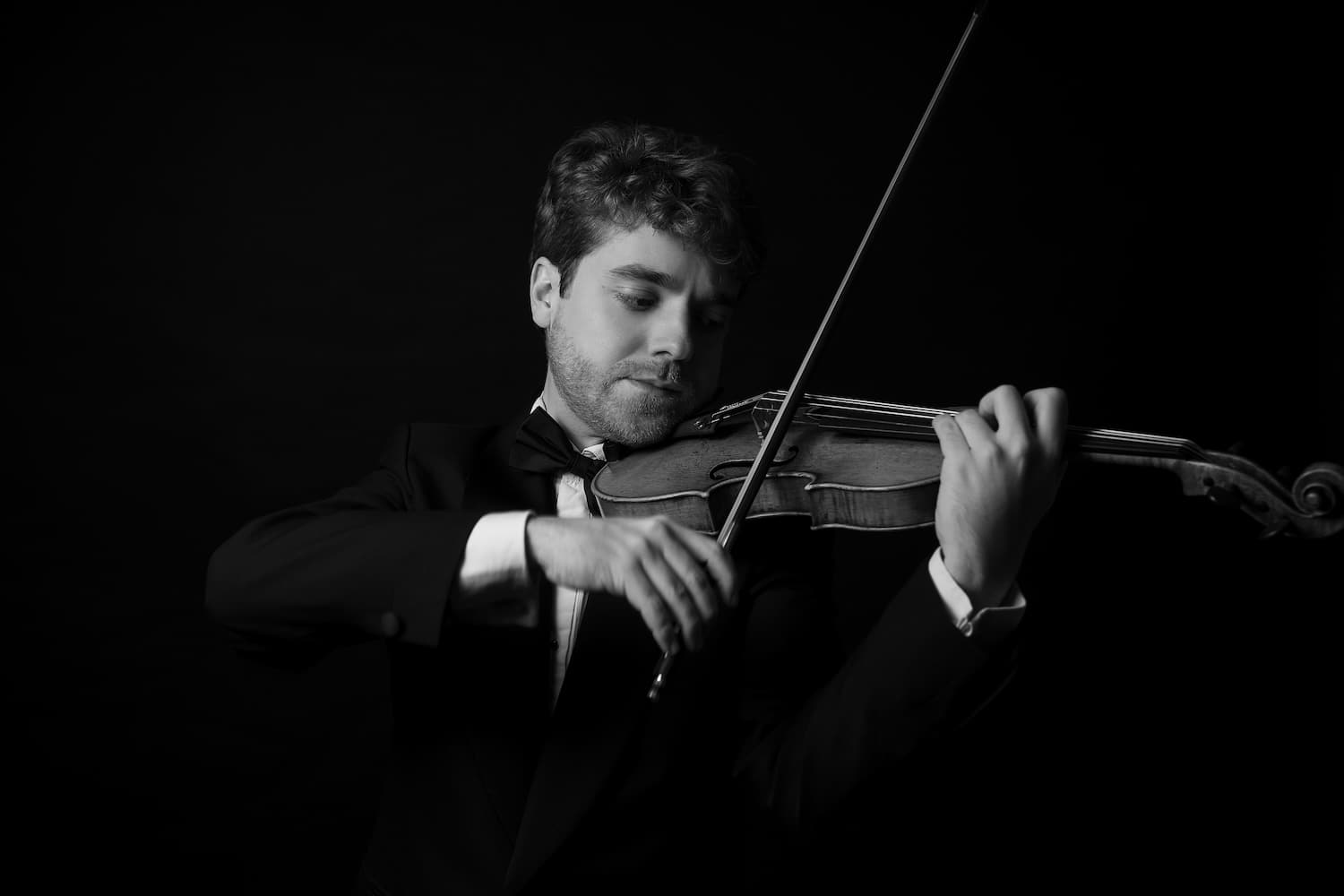
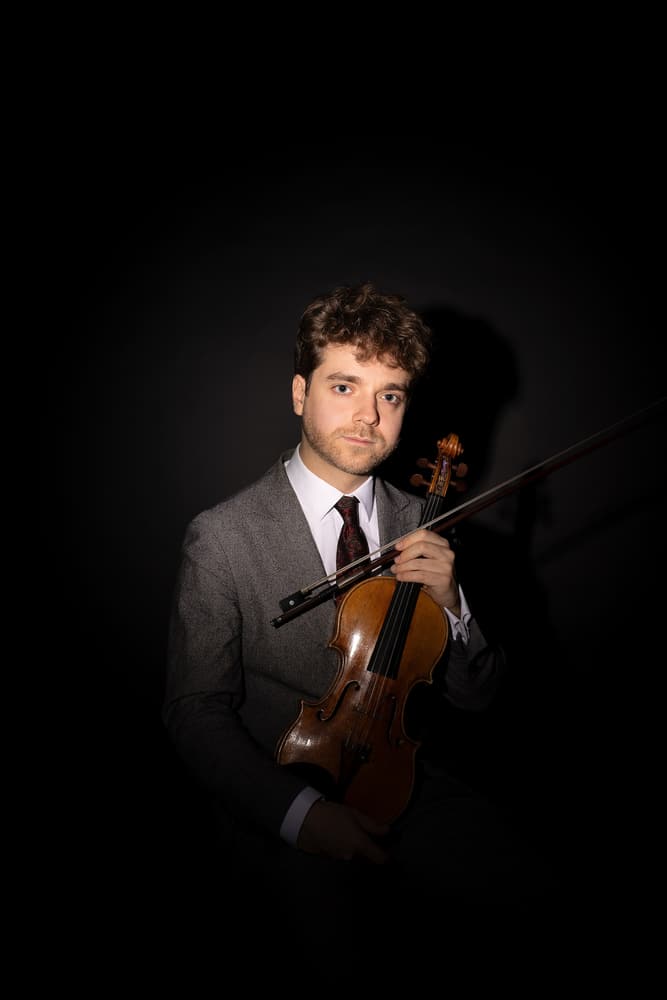
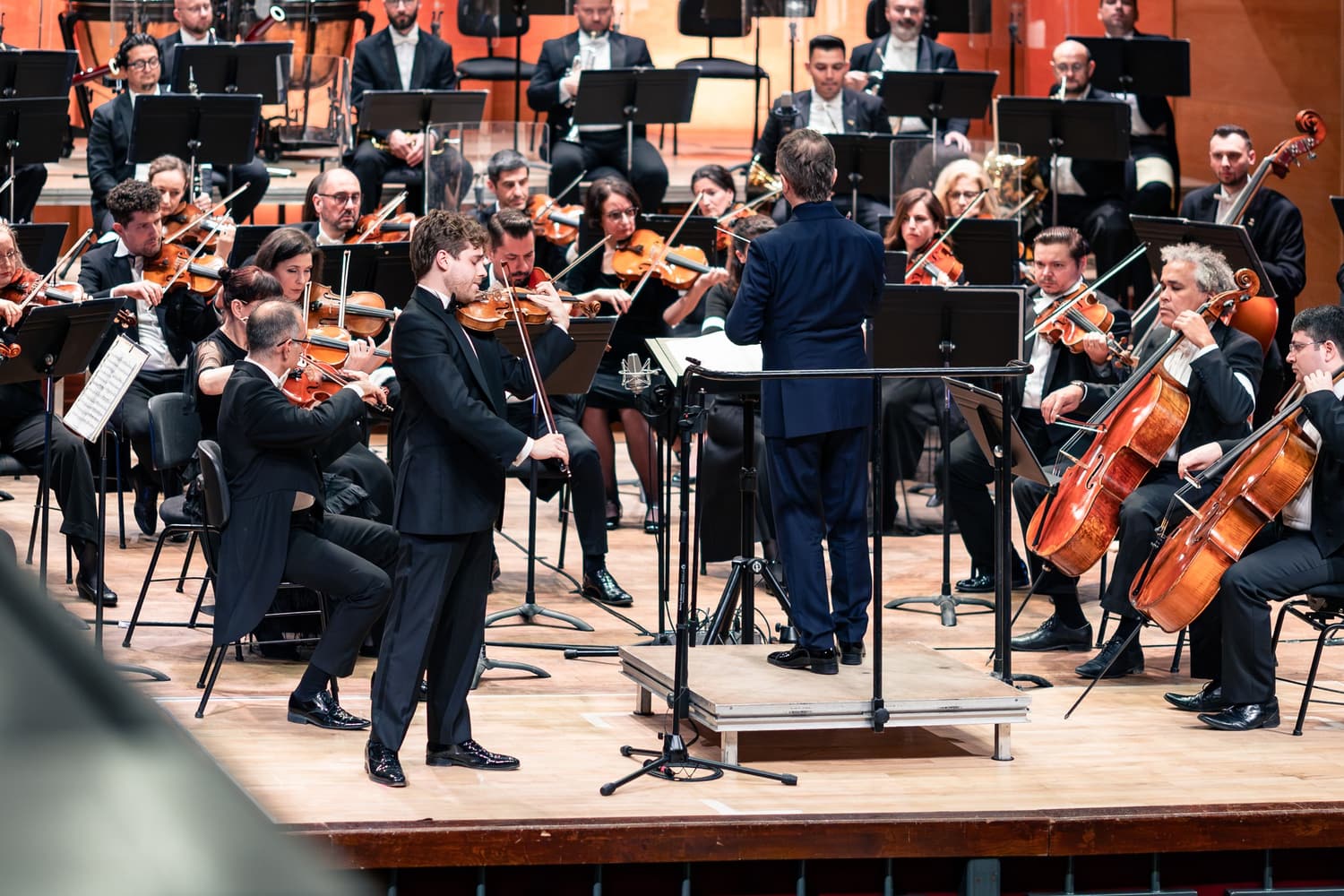
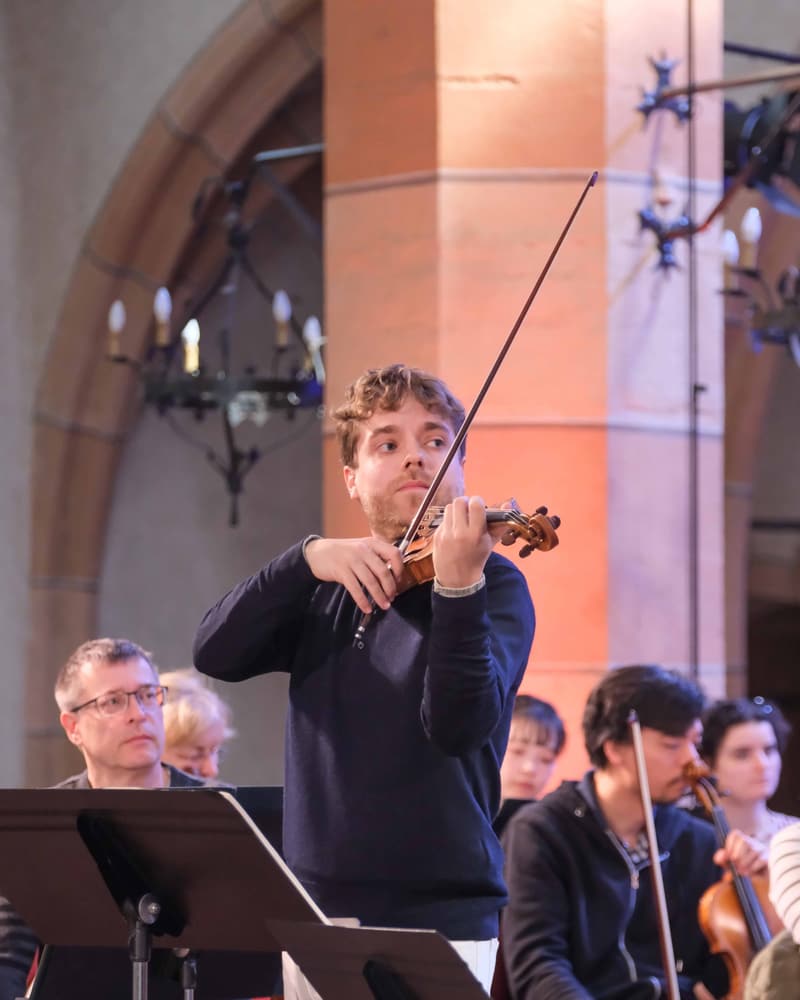
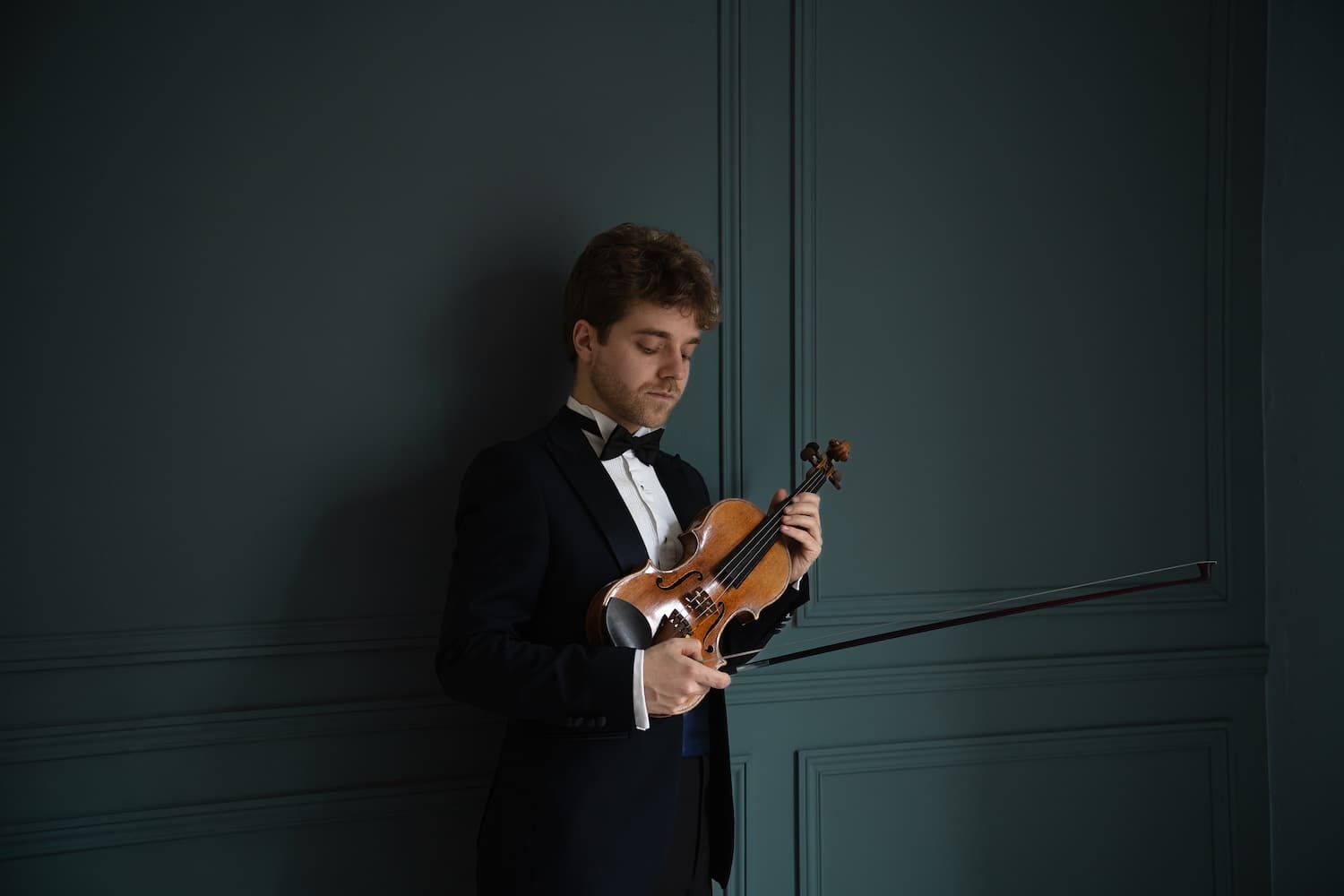
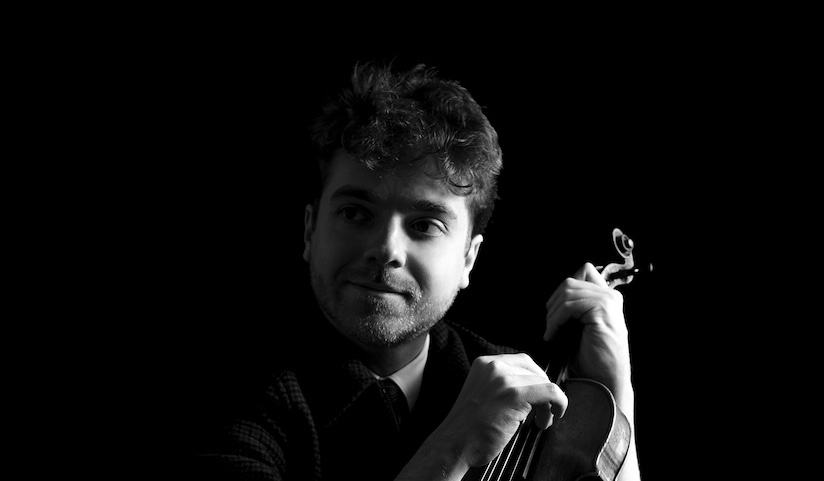
City Music Foundation Artist, Artist in Residence at the Queen Elisabeth Music Chapel and the Fondation Singer-Polignac, member of the Ensemble Modern Academy and the London Contemporary Soloists — French violinist Emmanuel Coppey moves between centuries as between rooms of the same house.
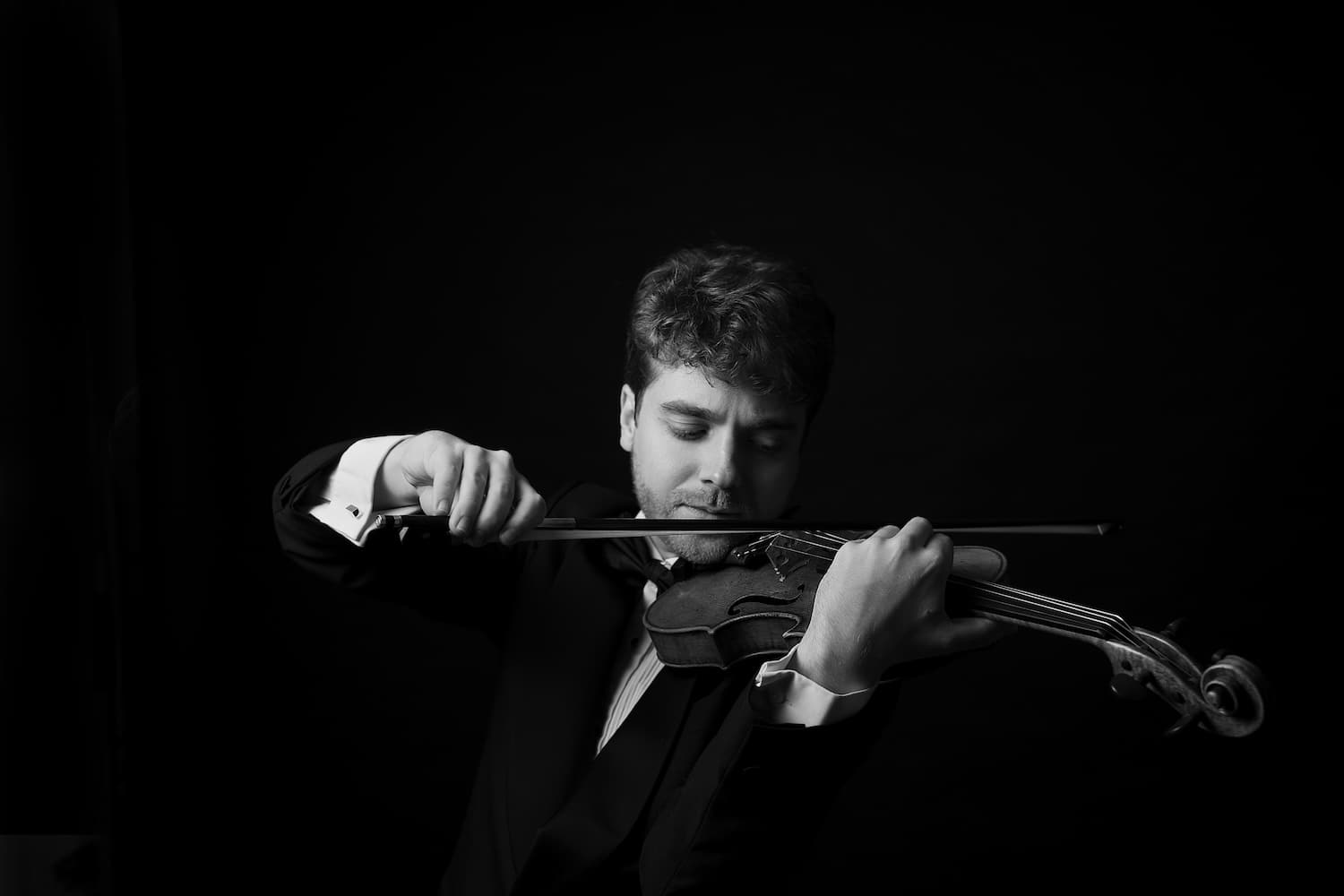
From the solitary polyphony of Bach to the Romantic circle of Joachim, from the refinement of the French school to the music being written today — five chapters, five ways of listening. He plays a magnificent Guarnerius of 1735, generously loaned by the Guttman collection.
Download the full biographyPDFBach, and the circle of Joachim
The six Sonatas & Partitas carried as a single arc — and the Romantic lineage of Joseph Joachim: cadenzas, Romances, chamber music among friends.
For Emmanuel Coppey, the solo works of Johann Sebastian Bach are the grammar of the violin: polyphony drawn from four strings, dance turned into architecture, silence given the weight of a note. He performs the complete cycle of Sonatas & Partitas, with which he won the New York Bach Competition in 2023.
His baroque playing reaches well beyond the solo works — notably as a soloist alongside Rachel Podger, and in Bach’s concertos.
Joseph Joachim shaped the Romantic violin: Brahms’s Hungarian Dances arranged for violin, Clara Schumann’s Romances dedicated to him, cadenzas written for the great concertos. Emmanuel returns to this world as to a family home — writing his own cadenzas for Mozart, playing the Romances, arranging Brahms.
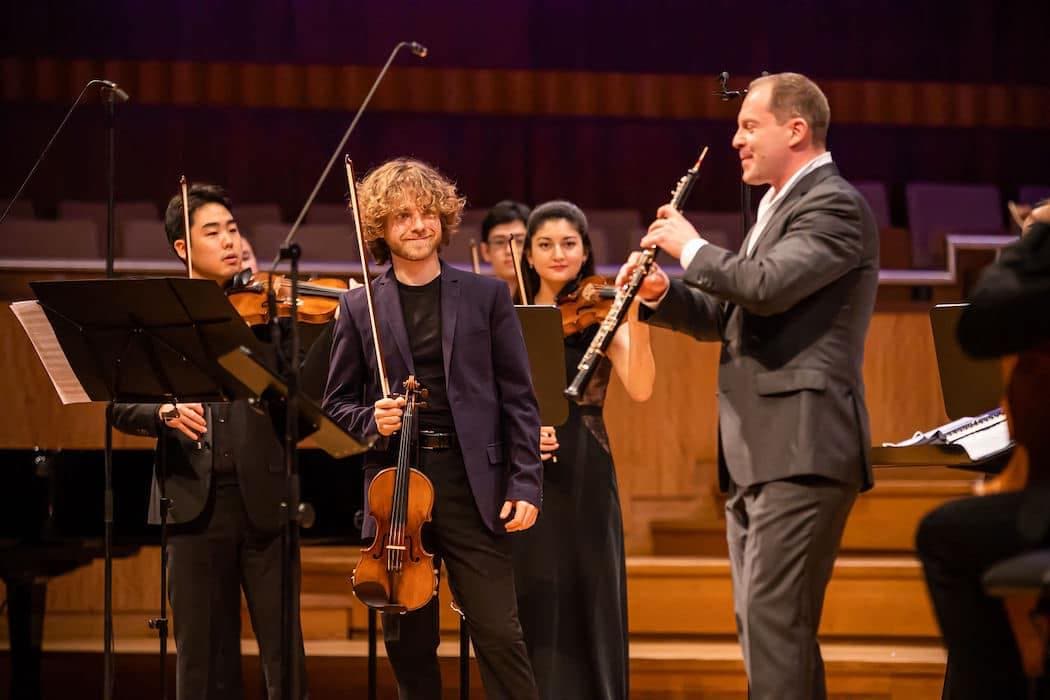
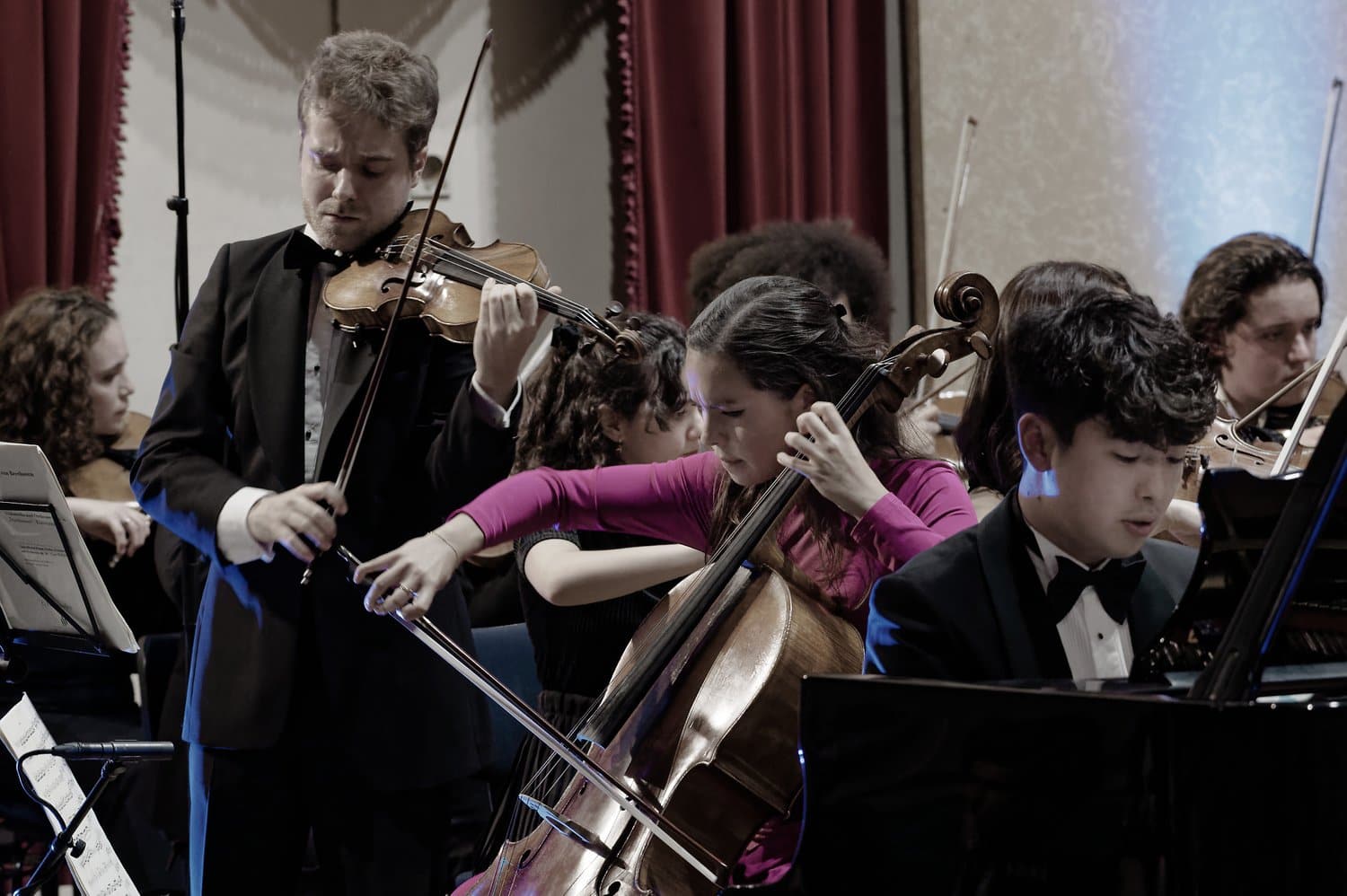
A sought-after chamber musician, he has shared the stage with Augustin Dumay, Nelson Goerner, Marc Coppey, Anna Vinnitskaya, Bertrand Chamayou, Frank Braley, François Salque, Martin Beaver, Nicolas Baldeyrou, Emre Şener and Guillaume Bellom, in some of Europe’s most prestigious chamber music festivals.


I’ve never heard a better live performance of the Bach unaccompanied violin pieces.— Washington Bach Consort
The Arranger, a second pen
From Dukas’s Sorcerer’s Apprentice to Brahms lullabies — transcription as a way of reading music from the inside.
Arranging is how Emmanuel listens twice. Each transcription begins at the desk, pencil in hand, asking what the violin can reveal that the original instrument kept hidden.
His virtuoso showpiece after Dukas’s L’Apprenti sorcier sits beside Brahms’s Hungarian Dance No. 5 and Wiegenlied, Mendelssohn’s Songs without Words, the folk melody Mocirita — and his own cadenzas for Mozart’s Concerto No. 2.


The French school, and modernity
Clarity, colour and the art of the bow — from the Conservatoire de Paris and Ysaÿe’s Belgium to the music of today.
Emmanuel’s musical education began with Larissa Kolos. He graduated from the Conservatoire de Paris, where he studied with Philippe Graffin and Svetlin Roussev, and from the Royal Academy of Music; he has also been taught by György Pauk and Augustin Dumay.
Artist in Residence at the Queen Elisabeth Music Chapel — in the land of Ysaÿe — and, since July 2024, at the Fondation Singer-Polignac in Paris, he carries the French and Franco-Belgian school as a way of listening: a refinement of timbre that colours everything he plays.
Emmanuel’s repertoire runs from the baroque to the music of today. A member of the Ensemble Modern Academy and of the London Contemporary Soloists, and a City Music Foundation Artist, he brings to new music the same rigour he gives to Bach.
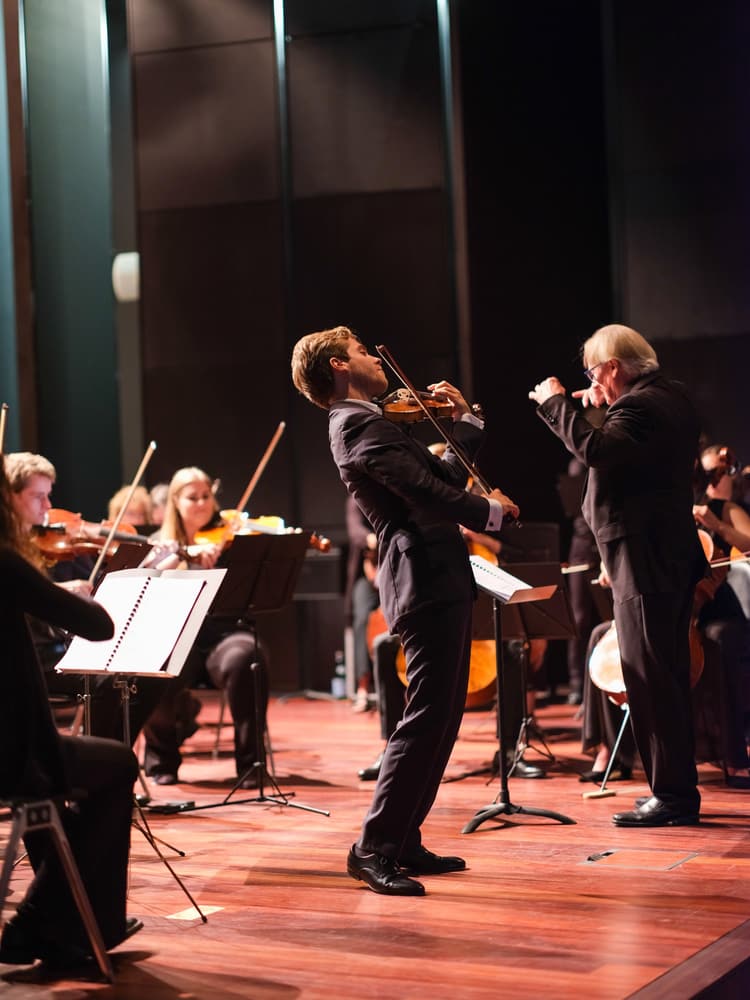
As a soloist he has worked with Jérémie Rhorer, Vahan Mardirossian, Rachel Podger, Alexei Ogrintchouk, Guy van Waas and Christopher Warren-Green — and in chamber music with Barbara Hannigan. For him, modernity is not a rupture but the tradition still in motion.


Coppey gave us the key to the Ysaÿe Sonata, suddenly opening the sky toward the light.— Le Soir
Enchanted Streets: Paris
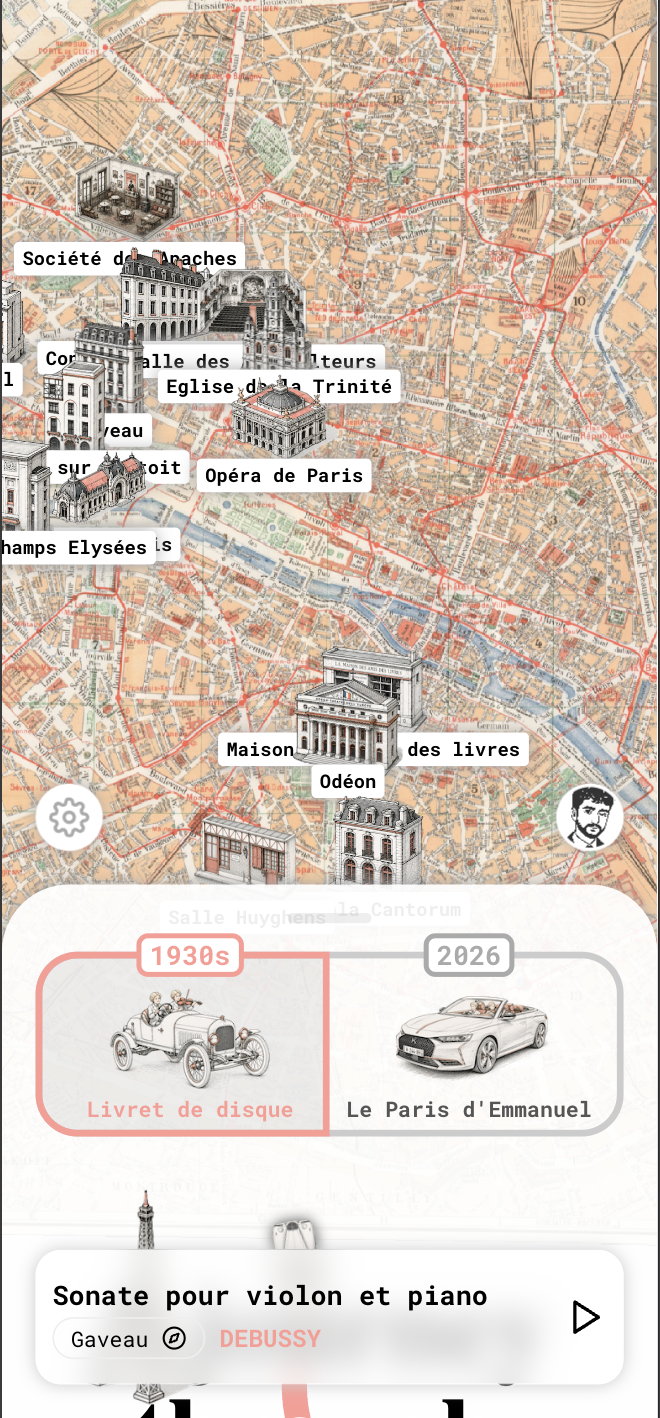
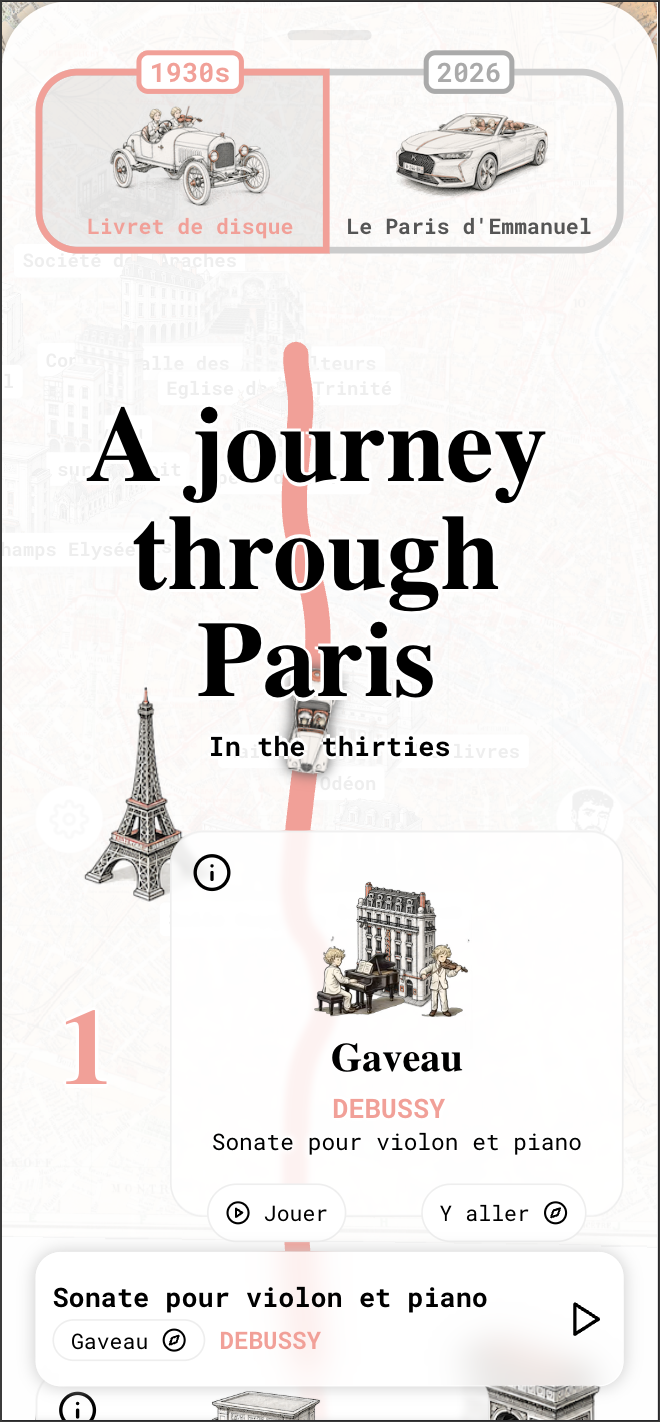
A debut album for Aparté and an illustrated companion app — a journey through the music, places and artistic energy of Paris, from the Belle Époque to the 1930s.
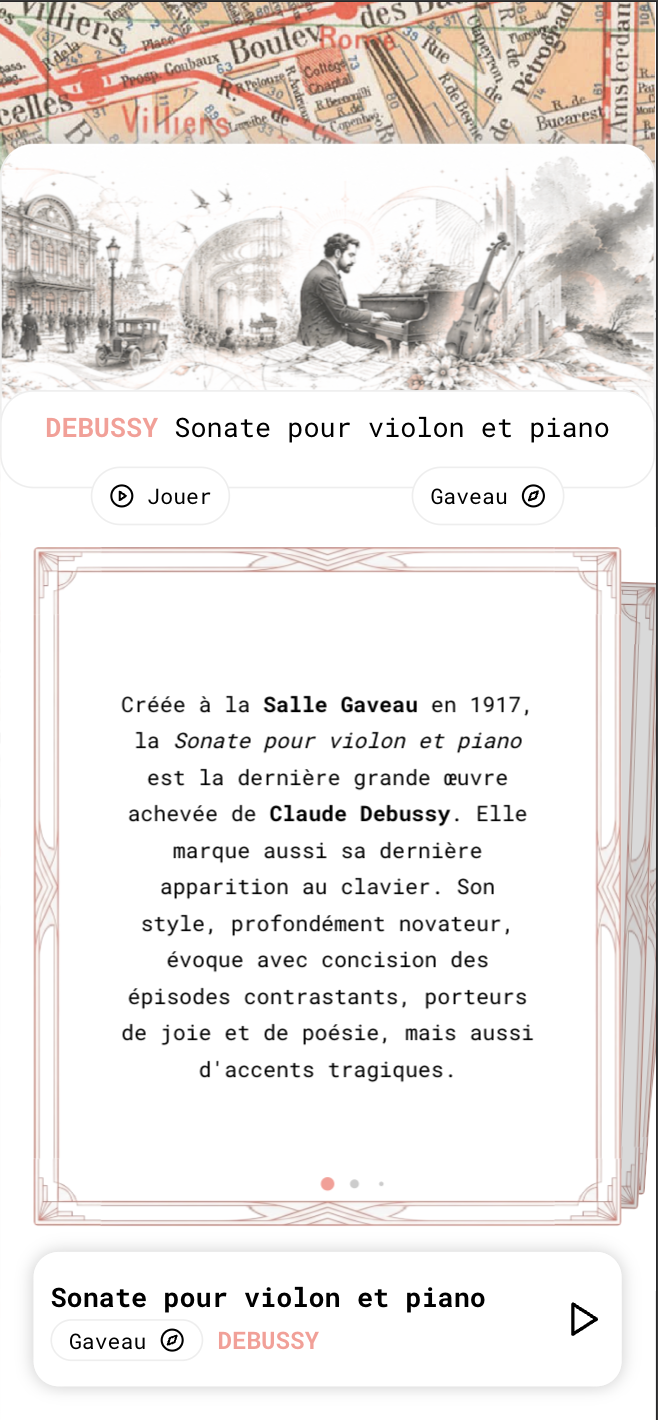
Enchanted Streets: Paris is more than a record. Sixteen works — masterpieces, rare gems and original arrangements — each tied to a place in the city: the concert halls, salons, cabarets and streets where this music was born.
The programme runs from Debussy’s Sonata and Ysaÿe’s “Ballade” to Messiaen’s Thème et variations, by way of Boulanger, Tailleferre, Ravel, Stravinsky, Varèse and Poulenc — and ends at the edges of the Parisian night, with Josephine Baker, Maurice Chevalier and Eddie South’s Rose Room. In Emmanuel’s arrangement of Dukas’s Sorcerer’s Apprentice, two players become a whole orchestra.
It was recorded over four days in August 2026 at the Queen Elisabeth Music Chapel — from ten in the morning until eleven at night — with pianist Arthur Hinnewinkel, mezzo-soprano Sofia Anisimova and sound engineer Paul Turquet.
The album comes alive in a companion app: follow each piece through 1930s Paris, discover the venues and stories that shaped it, and let the music unfold around you. The project is carried by its listeners, through a crowdfunding campaign.
It will be of documentary interest — what a sick man can write during a war.— Claude Debussy, on his Violin Sonata
Pedagogy, and the iFetz app
A new way of practising scales, inspired by Paganini’s secret — so that the whole fingerboard feels like one.
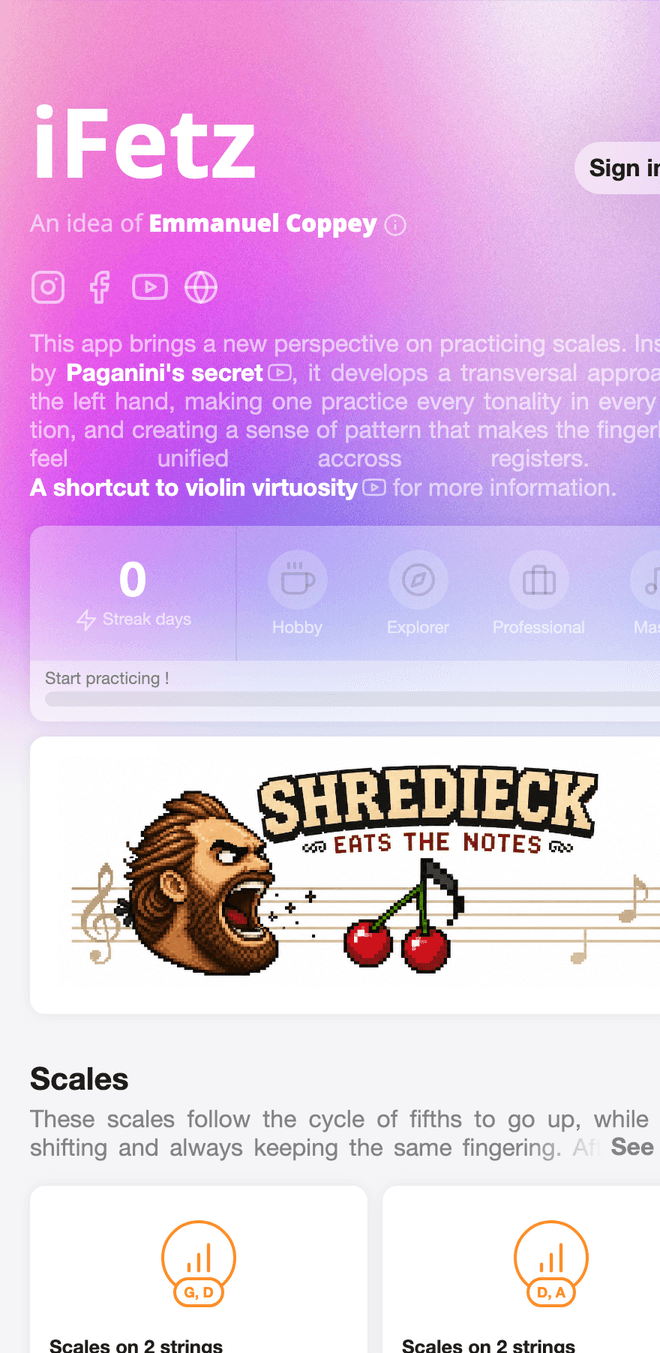
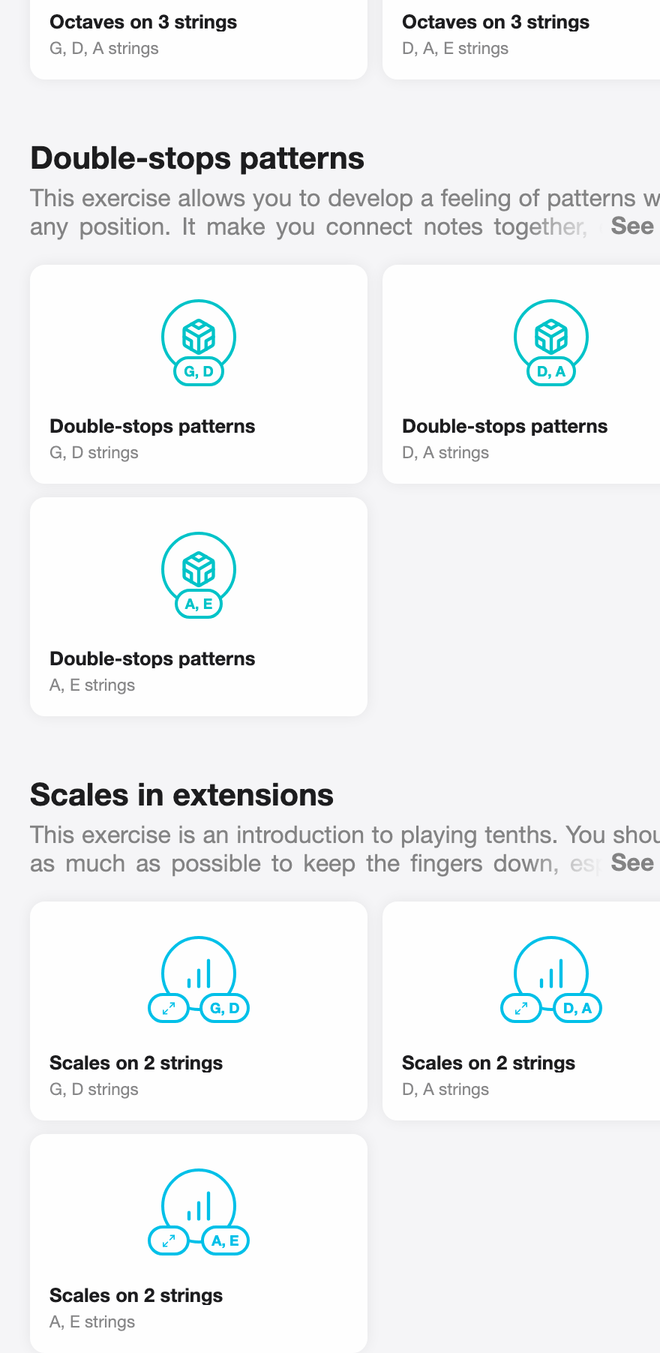
iFetz grew out of Emmanuel’s own practice. Inspired by what he calls Paganini’s secret, it develops a transversal approach to the left hand: every tonality is practised in every position, following the cycle of fifths, without shifting and always with the same fingering.
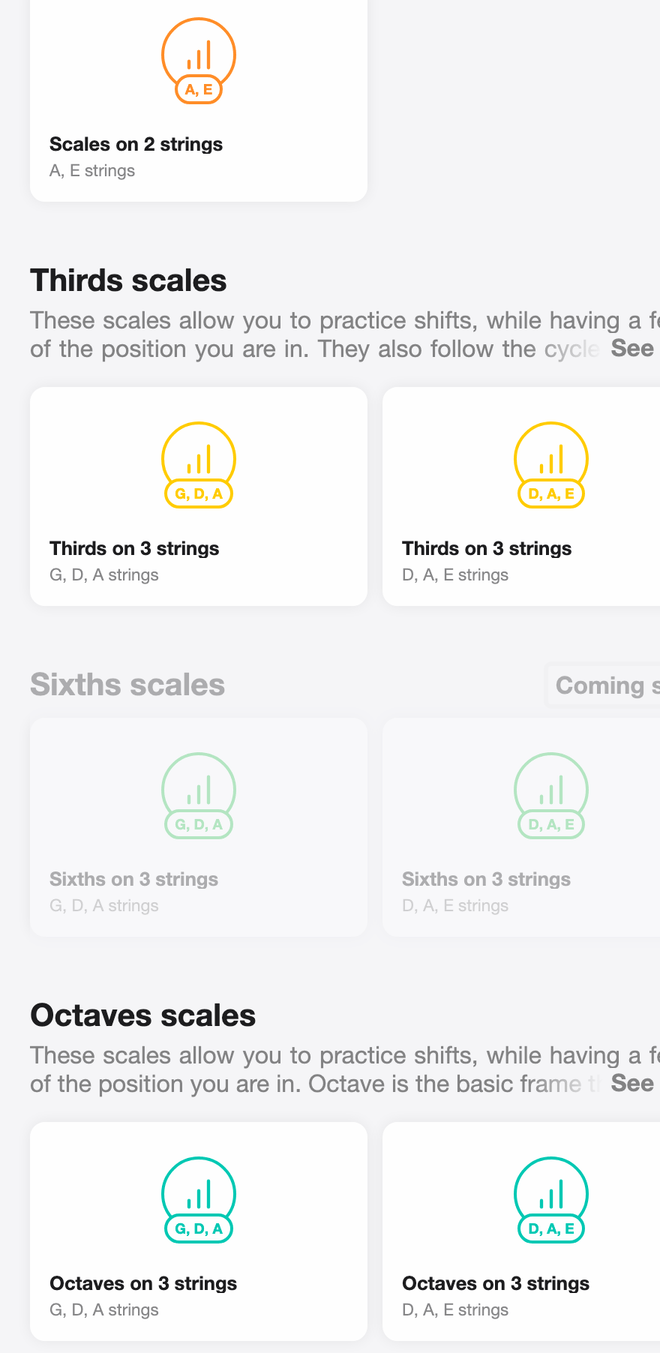
After a while every position feels equally comfortable, and a sense of pattern takes over — there are only seven of them. Scales on two strings lead to thirds, octaves, double-stop patterns, scales in extensions and fingered octaves, each exercise keeping the same idea: know which pattern you are playing, and feel the key you are in.
Practice streaks and levels — from Hobby to Explorer, Professional and Master — keep the daily work going, and players can ask Emmanuel directly from the app. Two films explain the method: “Paganini’s Secret Finally Explained” and the presentation of the app.


Emmanuel Coppey transcends technical excellence to assert a vision.— Le Soir
- Instrument
- Guarnerius, 1735Generously loaned by the Guttman collection
- Residencies
- Fondation Singer-PolignacSince July 2024 · Queen Elisabeth Music Chapel · City Music Foundation Artist
- Ensembles
- Ensemble Modern AcademyFrankfurt · London Contemporary Soloists
- Prize
- New York Bach CompetitionWinner, 2023
- Television
- Royal Christmas ConcertVivaldi, The Four Seasons — Belgian national television
- Studies
- Conservatoire de Paris · Royal Academy of MusicPhilippe Graffin, Svetlin Roussev, György Pauk, Augustin Dumay, Larissa Kolos
- Supported by
- Royal Academy of MusicAdami · Fondation de la Vocation · Fondation Banque Populaire


“Clarity and gentleness bathed in subtle colors.”
“Marvelous in its naturalness and drive, set in luminous sonorities.”
“His technique is extraordinary, his interpretations convincing, and he seemed to be entirely at ease playing some of the most difficult music ever written for the violin.”
“He already stands out as one of the most versatile soloists of his generation.”
“One praises the fervor and extreme precision of Emmanuel Coppey’s violin.”
“It was a performance of a lifetime.”
“An artist of vast culture.”
“Emmanuel Coppey went far beyond mere technical display in these Paganini Caprices, finding nuance and fully investing himself in the Ysaÿe Sonata.”
“Coppey gave us the key to the Ysaÿe Sonata, suddenly opening the sky toward the light.”
“I’ve never heard a better live performance of the Bach unaccompanied violin pieces.”
“A smiling and radiant violinist.”
“An emotion of enveloping sweetness, punctuated with subtle nuances and musical colors.”
“Emmanuel Coppey transcends technical excellence to assert a vision.”
“A creator of atmospheres.”
“We discover the purest of musicians.”
“This French violinist carved out a reputation at the competition as an original artist.”
“A subtlety of timbre that leaves one speechless.”